• Notes From Dave
  • my thoughts on some of the tough issues of short-term missions
  • God's Politics
  • jim wallis' smart, political, and God centered take on the issues of today
  • Progressive Eruptions
  • the liberal side of politics from shaw kenawe. a daily read of mine.
  • Conservatism With Heart
  • a conservative take on life and politics from a well connected missouri mom
  • Truthdig
  • left of center, and very informative. bob scheer's online journal
  • Coffee Klatch
  • home of the best coffee roaster in So. Cal. and where i learned to love coffee
  • The Coffee Geek
  • everything you need to know about coffee and how to make a great cup o' joe
  • Bleacher Report
  • varied sports blog, lots of attitude, and sometimes i'm a featured writer
  • Aubievegas
  • a mix of sports in general with a bent towards vegas and auburn
My Photo
Name:
Location: Las Vegas, Nevada

I am a self proclaimed coffee addict and Executive Director of a non profit missions agency working primarily in the Mexican cities of Oaxaca, Guadalajara, and Ensenada. I've been married for over 30 years to Chelle, and we have one grown son, Joseph, a graduate of Auburn University in Alabama.

Powered by Blogger

Thursday, June 27, 2013

¡Mezcal! Entendamos la bebida más de onda en los EE.UU.


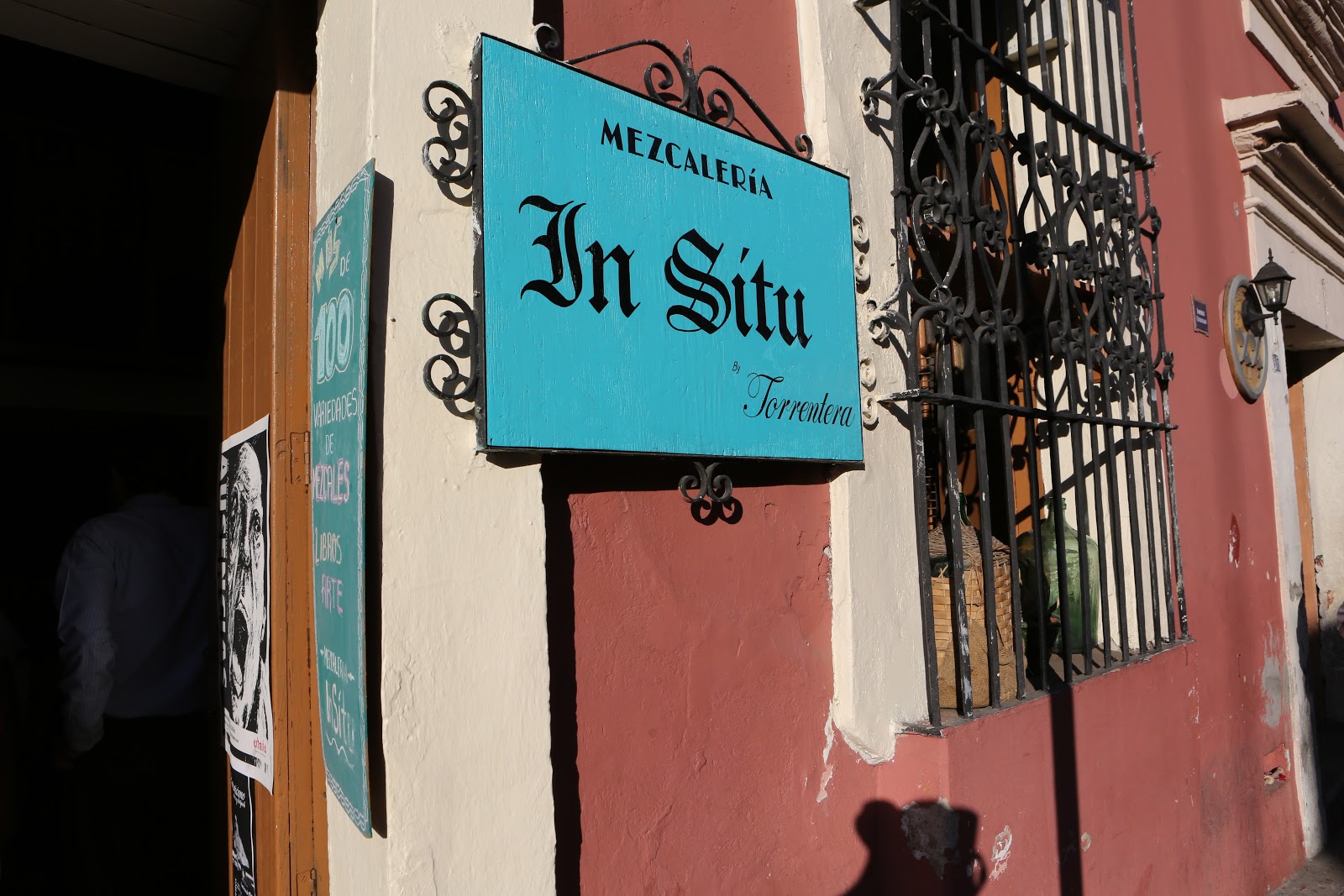
Yo miraba mientras el joven, quién quería ser un mezcalero maestro, esperaba nerviosamente.  Aquél joven vino a In Situ... la meca de mezcalerías... en dónde Ulises Torrentera, el Don de mezcal en Oaxaca, dedica cada día a su búsqueda para los mezcales más perfectos de Oaxaca.

El joven le ofrecía una prueba a aquél romántico moderno, quién le parece mucho a Diego Rivera.  Mientras probaba, el Don hacía unas preguntas antes de pronunciar un veredicto.

Para muchos americanos, pensar en mezcal es pensar en imágenes del actor Clint Eastwood en una de sus películas de vaquero con un cigarrillo en una mano y una botella de bebida con gusano en la otra.  Sin embargo, como lo explica Ulises, ya no es así: el mezcal ya está ganando lugar entre los grandes licores del mundo, saliendo de las sombra de su hermano mayor, el tequila.

El mezcal, un licor embriagador que puede transportarte a un lugar de memorias increíbles, se está convirtiendo rápidamente en uno de los licores de onda en ciudades estadounidenses como Seattle y Chicago.  Parte de ésta nueva popularidad es la gran variedad de mezcales que se producen en México, principalmente en el estado de Oaxaca.

Ulises, David y su Amigo Paco Garcia
Recientemente, visité con Ulises con el propósito de aprender cómo piensa él y de aprender de ésta bebida fabulosa.  Como dice mi amigo Paco Garcia, “Oaxaca es mezcal y mezcal es Oaxaca”, o, en otras palabras, “David, no se puede comprender Oaxaca a menos que se comprenda el mezcal!”

En una entrevista que cubría desde terroir [es integralmente importante] hasta su deseo como niño de ser escritor, empezamos con la historia vieja del mezcal.

Mezcal . . . un repaso

El mezcal como lo reconocemos hoy tiene ya más de 400 años de edad, a pesar de la insistencia de algunas personas que es un éxito nuevo  Descubierto y destilado por la gente indígena de México, el mezcal tiene una historia compleja.

Por cierto tiempo, el mezcal sufría una persecución más común en los Estados Unidos.  Acusado de ser responsable para todo tipo de maldad, su peor pecado fue que era la bebida preferida de las clases bajas para sus fiestas y sus celebraciones.  La clase alta de México (la gran mayoría de ella siendo europea) lo echaba la culpa por el crimen, las enfermedades de niños, la violencia y la corrupción.  Naturalmente, esto contribuyó a su prohibición.

Llegamos a la primera mitad del siglo veinte y la industrialización de la producción de la tequila.  México, con su cultura de machismo, aceptó a la tequila y tiró a un lado el mezcal, siendo que el mezcal tenía la reputación de ser algo bajo y primitivo.

Pasando a la segunda mitad del siglo veinte, vemos que la versión moderna del mezcal tomaba forma en Matatlán, la Cuña del Mezcal, una región al este de la Ciudad de Oaxaca.

El Maguey y el Proceso

Ulises, el Don de Mezcal en Oaxaca
Cocinado en ollas de barro y cobre en palenques locales, el mezcal era preparado por mezcaleros locales utilizando los métodos de destilar que ocupaban sus antepasados hace muchos s
iglos cuando la gente indígena de México descubrió que se podía hacer un alcohol fuerte por destilar la pulpa y los jugos del maguey y el agave.

Después de cosechar el maguey, se lo concina en un horno volcánico invertido.  Se lo muele con un muela antes de echarlo en tinas de madera para fermentar.  Dependiendo del mezcalero, se lo puedo destilar varias veces y ponerlo en botellas para vender.

Como dice Ulises, este proceso no se ha cambiado mucho a través de los siglos.  El cambio más grande será las ollas de cobre, aunque algunos palenques siguen usando las ollas de barro.

Hay tres tipos de magueys que se usan en la mayoría de los mezcales que vienen de Oaxaca.  El más popular es el espadín.  Alto con ramas que llegan a ser hasta dos metros, el espadín se madura en siete años.  Aunque lleva años en madurarse, lo bueno es que se reproduzca fácilmente.  Esta facilidad de reproducir explica la presencia de estancias en Oaxaca donde se puede encontrar miles de este tipo de maguey.

Magueys Espadin, Madre Cuishe
y Tobalá
Los otros dos tipos principales de maguey son el madre cuishe y el tobala.  Estos magueyes son especial a causa de los sabores complejos que dan al mezcal.  Sin embargo, el madre cuishe y el tobala no son tan numerosas como el espadín porque toman quince años para madurarse.  A pesar de las esfuerzas de mezcaleros dedicados, como la familia Garcia de Wahaka Mezcal, no se ha logrado mucho éxito en reproducir ni uno ni otro de estos magueyes.

Ulises dice que esto es un crises.  Si los intentos de proteger los magueyes silvestres no tienen éxito, no habrá cantidades suficientes de las plantas silvestres para satisfacer la demanda creado por la gente que quiere las matices que dan al mezcal.  Hay que preguntarse qué haría la industria si de repente se encontrara una escasez.  No hay muchos mezcaleros que quieren pensar en eso.  En lugar de eso, escogen esperar que la naturaleza resolverá los problemas que se formen.

Mientras confrontan este problema, algunos están decidiendo a mezclar varios tipos de magueyes como parte de su estrategia por sobrevivir.  Estas esfuerzas en mezclar los sabores nos dan algo que la maestra mezcalera Cecilia Rios, La Niña de Mezcal, llaman “la belleza del mezcal”.

La tequila se trata de la uniformidad, pero cada tipo de mezcal se diferente y nos provee con su propia aventura.  Esto se atribuye en una parte a la gran variedad de los magueyes que se usan en la producción del mezcal; de otra parte, se atribuye al local donde se crece el maguey.  Esto se llama “el terroir”.

El Terroir 

Según lo que dicen muchos mezcaleros, el terroir es el factor que más influye el sabor del maguey y, por extensión, el sabor del mezcal.  El medio ambiente, la tierra, la altitud y el clima se combinan en hacer un papel crítico.

Un aficionado refinado puede distinguir las diferencias sutiles en las minerales, la flora local y el clima de la región donde se encuentre el maguey.

Por eso, mucho screen que el palenque y el mezcalero deben de ubicarse muy cerca de su maguey.  Es esta proximidad y familiaridad que hace el retrato completo. Por unirse con la tierra, conocer sus plantas y el ambiente local y por usar los procesos antiguos, el mezcalero completa el círculo con su antepasados.

Como dice Ulises, esto es indispensable.

Yo le pregunté a Ulises si piensa que el mezcal llegará a ser más popular en los Estados Unidos.  Me dijo que esperaba que no, porque él quiere que la gente venga a Oaxaca para probar los grandes mezcales.

¿Por qué?

Porque Oaxaca es mezcal y mezcal es Oaxaca!

(c) Copyright Dave Miller 2013 - 2016. All Rights Reserved.
Translated by Brian Cumings


Labels: , , , , , , , , , , , , , ,

Tuesday, April 02, 2013

Mezcal! Understanding the new hippest drink in America…


I watched as the young man, hoping to one day be called a maestro mezcalero waited nervously.  He’d come to In Situ, the mecca of mezcalerias where Ulises Torrentera, the Godfather of Mezcal in Oaxaca, holds court daily in his quest to show off the finest mezcals in Oaxaca.

Ulises Torrentera at In Situ, Oaxaca
And here he was offering a taste to this modern day romantic and Diego Rivera lookalike.  As Ulises tasted, he asked questions before offering his verdict.

For many Americans, the idea of mezcal conjures up images of Clint Eastwood in one of those old spaghetti westerns with a cigarette in one hand and a worm-laden bottle in the other.  But as Ulises explains, those days are long gone as mezcal is starting to take its rightful place among the worlds great spirits as it emerges from the shadows of its cousin, the better known tequila.

Mezcal, an intoxicating drink that can immediately transport you to a place of incredible memories is quickly becoming a spirit trend-setter in United States cities like Seattle and Chicago.  Part of the reason for this is the wide variety of mezcal that is being distilled across Mexico, but primarily in the southern state of Oaxaca.

I recently sat down with Ulises to learn what makes him tick and see what I could learn about this great drink, for as my friend Paco Garcia says “Oaxaca is mezcal and mezcal is Oaxaca”, or as he explained it, “David, you cannot understand Oaxaca until you understand mezcal!”

In a wide ranging interview that went from terroir [it’s vitally important] to his desire as a young child to be a writer we started with the early history of mezcal.

Mezcal… a look back

Mezcal as we know it has existed for over 400 years despite the insistence of some that it has become an overnight success.  Discovered and distilled originally by the indigenous people of Mexico, mezcal has lived a checkered past.

L to R: Ulises Torrentera, Dave Miller and Paco Garcia
For a while mezcal suffered the type of persecution more familiar to spirits in the neighbor to the north. Accused of being responsible for all types of evil, perhaps its biggest sin was that it was the favored elixir of the poorer classes for their fiestas and celebrations.  The Spanish ruling elite of Mexico laid the blame for everything from childhood ills to local crime, violence and corruption at the feet of mezcal, which naturally led to its prohibition.

Fast forward to the mid 1940’s and the industrialization of tequila. Mexico, steeped in its macho culture embraced tequila, tossing aside the poorer cousin mezcal that was often seen as an unrefined drink for the lower classes.

It wasn’t until the mid 1950’s that we started to see the modern version of mezcal begin to take shape in an area east of Oaxaca City, known as Matatlán, the Cradle of Mezcal. Brewed in clay and copper pots at local palenques, local mezcaleros the same methods handed down by their forefathers hundreds of years ago when  used then, and still do today, the same methods of distillation used hundreds of years ago by their ancestors.

The maguey and process

Brewed in clay and copper pots at local palenques, local mezcaleros use the same methods handed down by their forefathers hundreds of years ago when the indigenous people of Mexico discovered that if you distilled the pulp and juices of the maquey and agave cactus you could make a powerful elixir.

Once that maguey is harvested it is cooked in essentially an inverted volcanic oven.  It is then treaded out under a millstone before going into wooden vats to ferment.  Next, depending on the mezcalaro, it is distilled a number of times and the bottled for delivery.

As Ulises said, this process has remained mostly unchanged over hundreds of years.  Perhaps the biggest change being the addition of the copper still, although some palenques still use the classic clay pots.

Magueys Espadin,
Tobala and Madre Cuishe
There are three magueys used in the majority of mezcal from Oaxaca, the most popular being the Espadin.  This is what most Americans think of when they think mezcal.  Tall with spindles sometimes reaching over 6 feet, the Espadin takes over 7 years to mature. While the maturation process takes years, the good thing about the Espadin is that it is easily reproduced.  That is why you can see farms with literally hundreds of this type of maguey planted around the countryside in Oaxaca.

The other two principle magueys used are the Madre Cuishe and the Tobala. These magueys are prized for the complex flavors they bring to mezcal. But there is a problem brewing.  Both the Madre Cuishe and the Tobala are less plentiful than the Espadin and can take up to 15 years to reach maturity, double the Espadin.  Despite efforts by some dedicated mezcalaros, notably the Garcia family of Wahaka Mezcal, there has not been much success in reproducing or replanting either of these magueys.

Ulises calls this a looming crises.  If the efforts at reforestation of these magueys are not successful, there may not be enough wild product to satisfy the growing demand of people desiring the subtle nuances they bring to mezcal.  What will the industry do he asks if we suddenly find ourselves facing a shortage?  It is a question few really want to ponder, choosing instead to hope that somehow nature will solve whatever problems come.

Yet even as the mezcaleros face this issue, some are choosing to mix and blend other types of magueys as part of their strategy to survive.  These efforts at mixing flavors give us what Maestra Mezcalera Cecilia Rios, La Nina de Mezcal, calls the beauty of mezcal.

Unlike tequila that strives for a certain consistency, every type of mezcal is different and takes you on another adventure.  And while part of that difference is due to the wide variety of magueys used for mezcal, another large factor is where the maguey is grown, sometimes known as terroir.

Terroir

To many, this is the central most important thing that influences the taste of the maguey and by extension, mezcal.  The environment, the soil, the altitude and the weather all combine to play a crucial role in the final product.

A finely tuned palette can taste the subtle differences in minerals, local flora and climate of the area where the maguey is found.

It’s one reason many believe that both the palenque and the mezcalero must be close to their maguey.  It is this proximity and familiarity that connects all of the dots.  By being at one with the land, knowing his plants, his local environment and using the same processes passed down through generations, the mezcalero closes the circle with their ancestors.

This, in Ulises opinion, is indispensible.

I asked Ulises if he thought mezcal would ever break out of its niche in the United States.  He said he hoped not because he wanted people to come to Oaxaca to try the great mezcals.

Why? Because Oaxaca is mezcal and mezcal is Oaxaca!

Measuring up

I watched as the young man, struggling to keep his composure, answered all of Ulises’ questions, knowing his future was on the line.  And then came the moment of truth.  The taste.  Ulises swirled it around in the glass and smelled it.  He took one, two, maybe three sips before finally giving his verdict.

Yes, he’d be glad to put a bottle of this mans mezcal on the wall of the greatest mezcals in Oaxaca and thus was born another in the long line of maestro mezcaleros.

© All rights reserved by Dave Miller

[A special thanks to Ulises Torrentera, Cecilia Rios, Paco, Beto and of course Ed Draves of Premier Wines for help on this article]

Labels: , , , , , , , , , , , , , , , , , ,